Kapnative
PRIVATE MARKETS / ROLE-BASED PRODUCT DESIGN
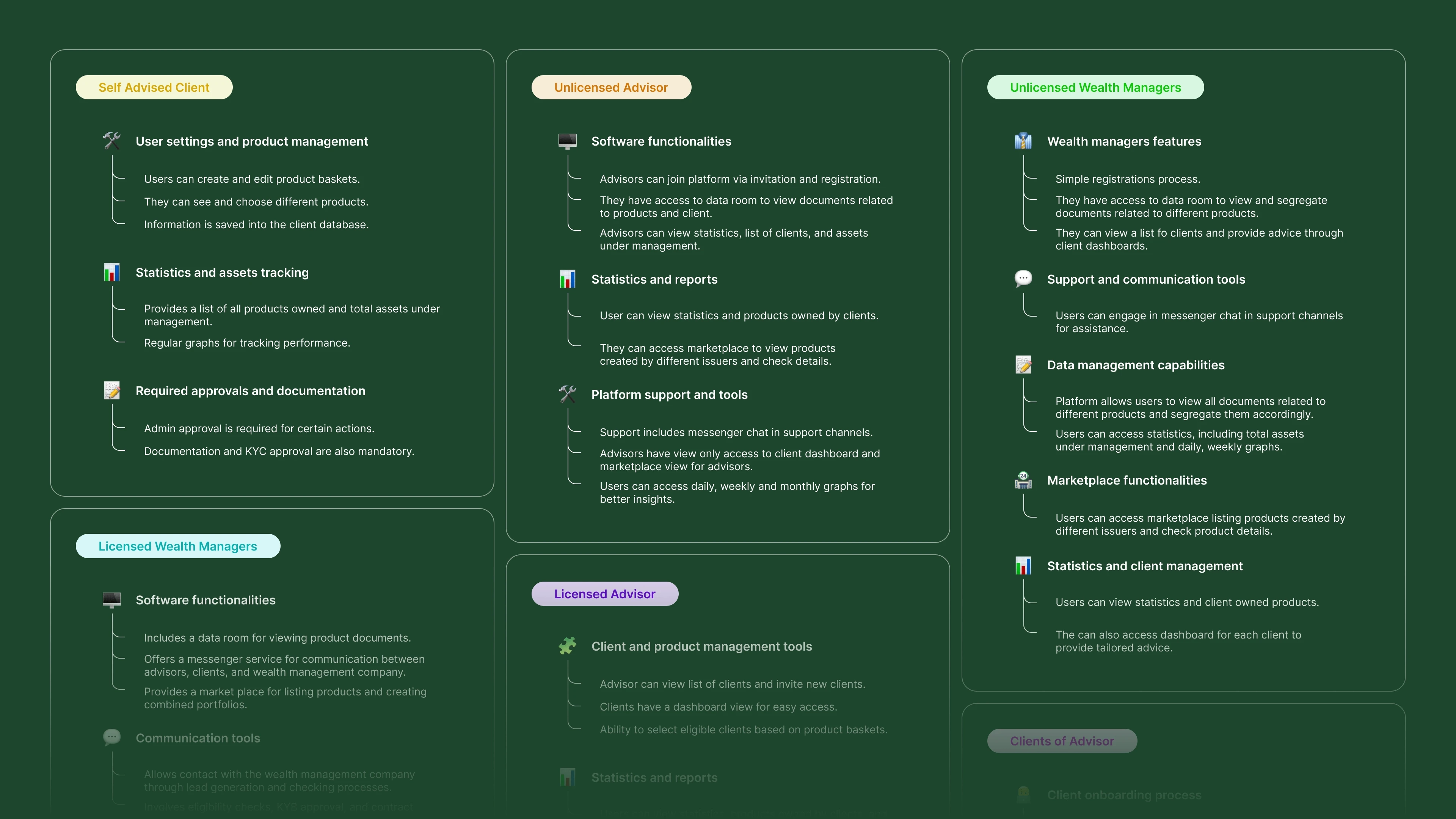
We designed six routes for Kapnative so each participant could review investments, provide evidence, and manage responsibility from the right starting point.
We designed six routes for Kapnative so each participant could review investments, provide evidence, and manage responsibility from the right starting point.
Kapnative brought private market products to six groups with materially different permissions, responsibilities, and document requirements. A self-advised client, an adviser, and a wealth manager did not enter the work with the same information or authority. The product needed to recognise those differences from the first screen.
Kapnative brought private market products to six groups with materially different permissions, responsibilities, and document requirements. A self-advised client, an adviser, and a wealth manager did not enter the work with the same information or authority. The product needed to recognise those differences from the first screen.



Challenge
Challenge
The platform served self-advised clients, advisers, wealth managers, and invited participants with different rights and obligations. Giving them one shared route would have mixed product review, client management, eligibility, and document requests. The problem was to separate those responsibilities without making the platform feel like six unrelated products.
The platform served self-advised clients, advisers, wealth managers, and invited participants with different rights and obligations. Giving them one shared route would have mixed product review, client management, eligibility, and document requests. The problem was to separate those responsibilities without making the platform feel like six unrelated products.
What we did
What we did
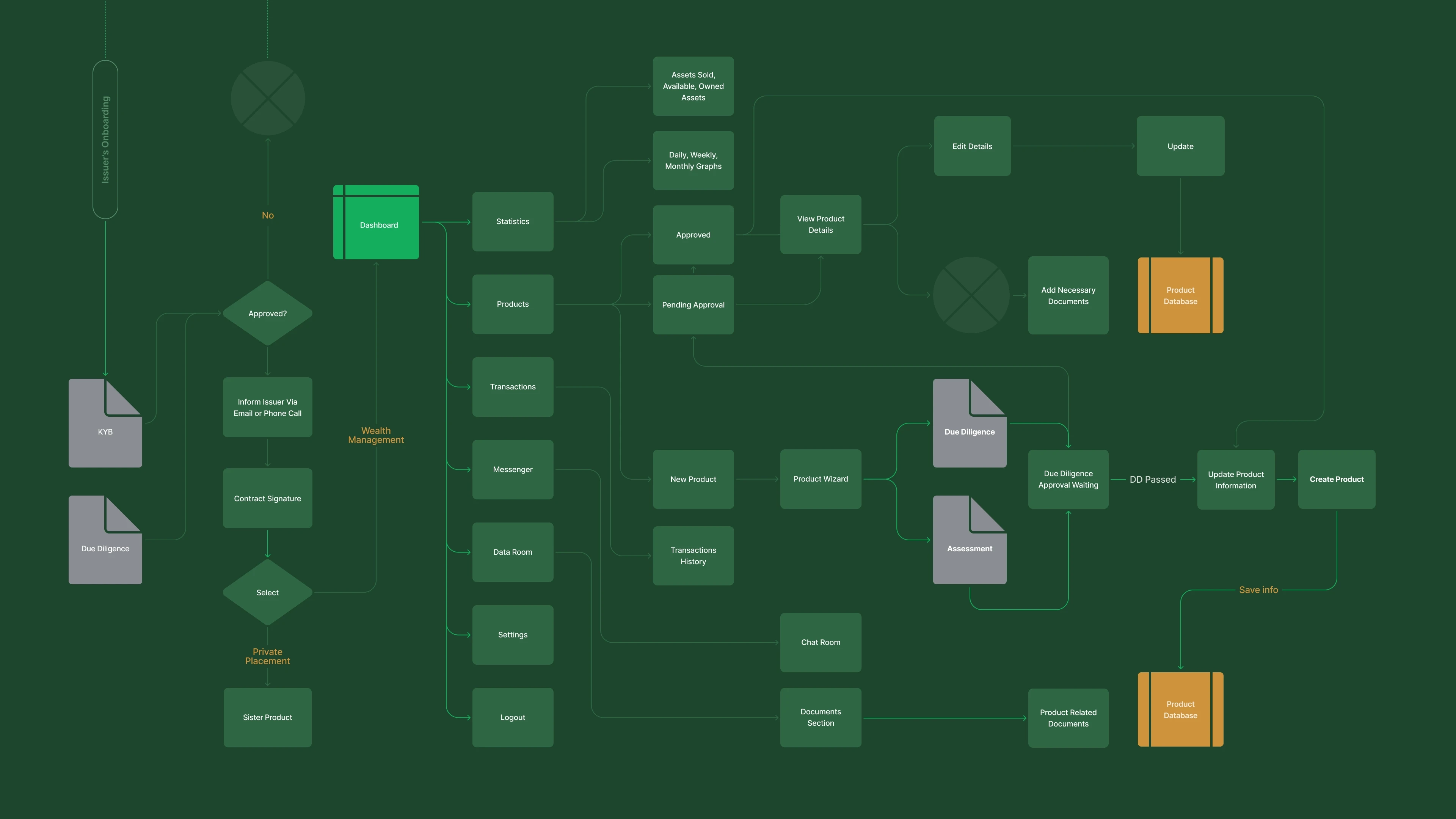
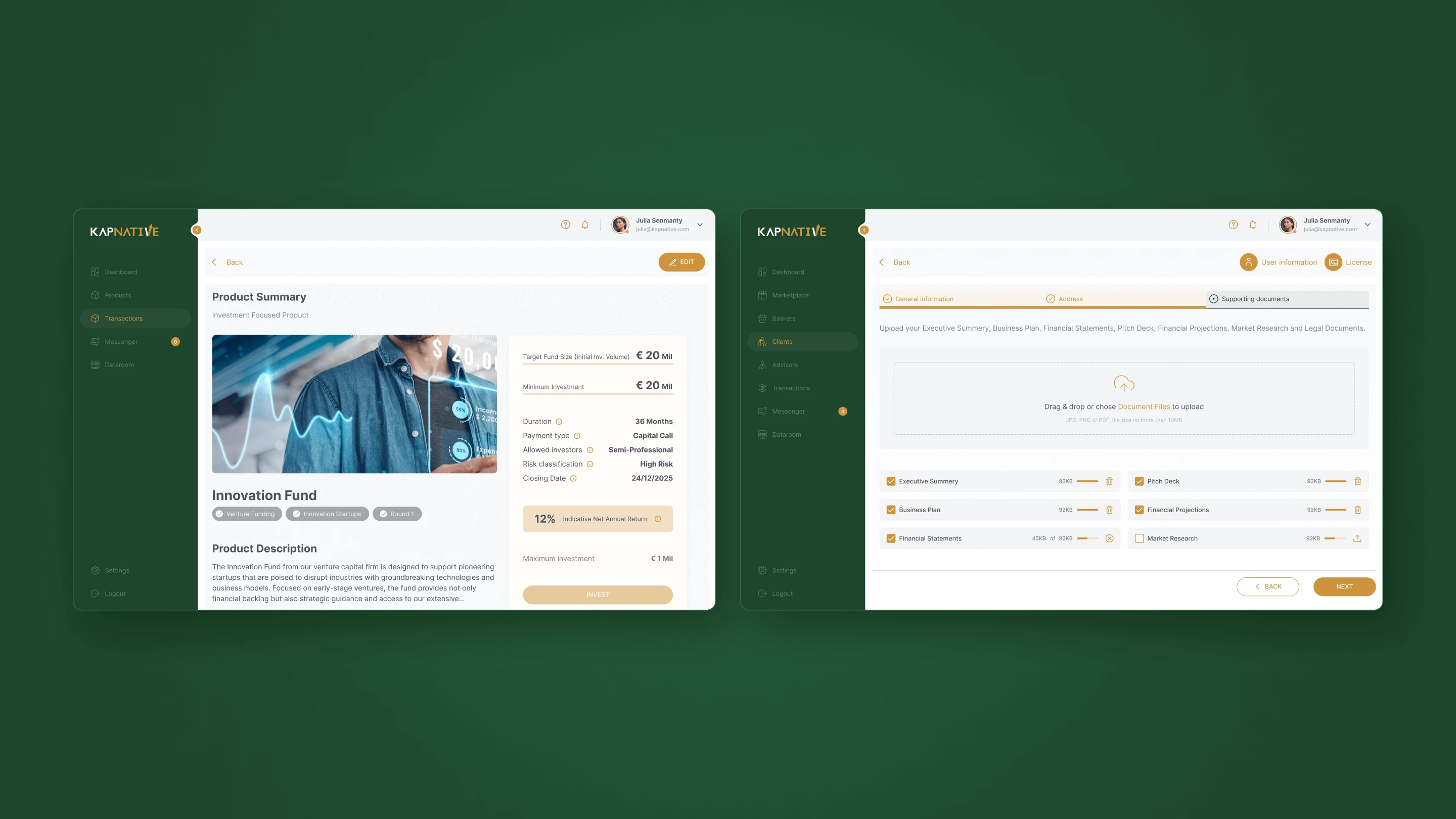
We shaped the navigation, onboarding, product cards, data views, permissions, and document flows around each participant group. The route for a client introduced approval, KYC, product review, and supporting documents. Adviser and wealth manager routes added client, basket, commission, and team functions where their responsibilities required them. Messenger supported coordination between advisers, clients, and product owners.
We shaped the navigation, onboarding, product cards, data views, permissions, and document flows around each participant group. The route for a client introduced approval, KYC, product review, and supporting documents. Adviser and wealth manager routes added client, basket, commission, and team functions where their responsibilities required them. Messenger supported coordination between advisers, clients, and product owners.
Why it mattered
Why it mattered
In private markets, a screen cannot explain a responsibility that has not been assigned. The route has to show what a person is allowed to do, what evidence they must provide, and which investment information belongs to them. That sequence made the product easier to follow while keeping a common set of interface rules behind it.
In private markets, a screen cannot explain a responsibility that has not been assigned. The route has to show what a person is allowed to do, what evidence they must provide, and which investment information belongs to them. That sequence made the product easier to follow while keeping a common set of interface rules behind it.
The work produced six visible navigation and capability patterns, together with product review and staged document screens. Each route begins from a participant's own responsibilities while using shared interface rules for the product. No commercial or performance result is claimed.

Relevant expertise
Financial Product UX
Information Architecture
Role-Specific Workflows
Design Systems
Due Diligence Experience
.related work